India’s economy continues to show resilience despite a challenging global environment. Strong domestic activity, infrastructure investment, and improving formal job creation are supporting the country’s growth, while energy prices, geopolitical tensions, and global trade uncertainty remain important risks.
According to the World Bank’s April 2026 India Development Update, India’s economic growth accelerated to 7.6% in FY2025–26, up from 7.1% in FY2024–25. The World Bank projects growth to moderate to 6.6% in FY2026–27, reflecting headwinds including the impact of the Middle East conflict, higher energy prices and supply-chain disruptions.
For businesses and households, however, the important question is not simply whether India’s economy is growing. It is how that growth affects jobs, prices, investment, business opportunities and household finances.
India Remains Among the Fastest-Growing Major Economies
Despite heightened global trade tensions, India remained the fastest-growing major economy in FY2025–26, according to the World Bank.
The latest update also points to several factors that provide some protection against external shocks, including India’s foreign-exchange reserves, relatively low inflation, predominantly rupee-denominated public debt and a healthy financial sector.
The country’s current-account deficit stood at about 1% of GDP, while formal job creation strengthened during the period covered by the World Bank’s assessment.
These strengths do not eliminate economic risks, but they provide India with some room to manage external pressures.
Why Could Growth Slow in FY2026–27?
A projected slowdown from 7.6% to 6.6% does not necessarily mean that India’s economy is moving into a crisis.
Instead, the World Bank’s forecast reflects a more difficult external environment.
The Middle East conflict has increased risks surrounding energy prices and supply chains. Since India imports a significant amount of its energy, sustained increases in international energy costs can affect transportation, manufacturing, logistics and household expenses.
Other global factors, including trade restrictions and uncertainty around international commerce, could also influence India’s exporters and manufacturers.
This makes diversification of both energy sources and trade relationships increasingly important for India’s economic resilience.
Infrastructure Remains an Important Growth Driver
Infrastructure is another important part of India’s economic story.
Investment in roads, railways, ports, airports, urban transport and digital infrastructure can improve connectivity and reduce the cost and time involved in moving people and goods.
Major infrastructure projects can also generate demand across construction, engineering, logistics, technology and related industries.
For example, Mumbai’s Coastal Road Project illustrates the scale of infrastructure development taking place in one of India’s largest cities.
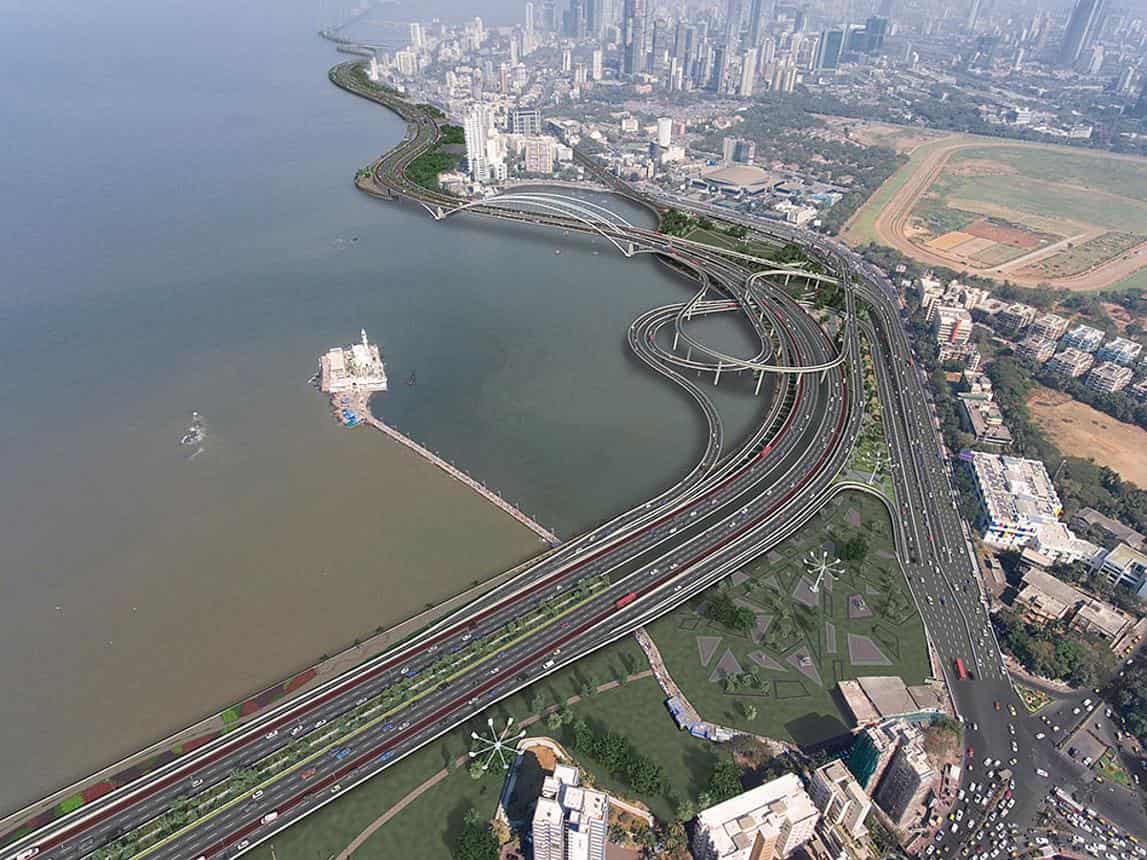
Infrastructure is not simply about building physical assets. Better connectivity can help businesses reach customers, workers reach jobs and goods move more efficiently between markets.
What Does India’s Economic Growth Mean for Businesses?
A growing economy can create opportunities for businesses, but economic growth alone does not guarantee that every company will benefit.
Businesses still have to manage:
- Changing consumer demand
- Raw-material and energy costs
- Competition
- Financing costs
- Regulation
- Technology changes
- Supply-chain risks
- Domestic and international market conditions
For small and medium-sized businesses, stronger domestic demand can create opportunities to expand products and services.
For larger companies, infrastructure, manufacturing, healthcare, tourism, technology and other sectors may offer opportunities for investment and expansion.
The World Bank has identified areas including energy, infrastructure, manufacturing, tourism, healthcare and agribusiness as sectors where private-sector-led growth can contribute to investment and job creation.
The key point is simple: a growing economy creates opportunities, but individual business success still depends on execution, efficiency and financial discipline.
Jobs Will Be One of the Most Important Measures
Economic growth matters most to people when it translates into productive employment and better economic opportunities.
The World Bank’s June 2026 financing announcement for India placed strong emphasis on private-sector-led job creation and reforms designed to improve the environment for businesses and investment. The World Bank approved $1.5 billion in financing to support reforms aimed at boosting private-sector job creation and economic growth.
The World Bank said the program could help create opportunities for the 11 million young people expected to enter India’s labour market each year over the next two decades.
This makes employment one of the central tests of India’s economic progress.
Growth that creates productive jobs can have a wider impact on household income, consumption and living standards.
What Does This Mean for Indian Households?
For households, a strong economy can create opportunities through employment, entrepreneurship and business activity.
But headline GDP growth does not automatically mean that every family will have more money available to spend.
Households continue to face everyday expenses such as:
- Food
- Housing
- Transportation
- Education
- Healthcare
- Insurance
- Loan repayments
- Savings and investments
The effect of economic growth on an individual family therefore depends on factors such as income growth, employment stability, inflation and borrowing costs.
This is why personal financial planning remains important even when the wider economy is performing well.
Energy Prices Could Remain Important
Energy is one of the biggest external factors to watch.
Higher international oil and energy prices can increase costs for businesses and consumers.
The impact can spread through the economy because fuel and energy are connected to transportation, manufacturing, logistics and many other activities.
If businesses face higher costs, they may have to absorb those costs, reduce margins or pass some of them on to consumers.
For households, this can eventually affect transportation and the prices of goods and services.
The World Bank has therefore highlighted energy diversification as an important part of India’s ability to manage external risks.
Global Trade Is Another Risk to Watch
India’s economy is increasingly integrated into global markets.
Changes in international trade policies can affect Indian exporters, manufacturers and businesses that depend on imported components or raw materials.
Trade diversification can help reduce dependence on any single market.
The World Bank’s April 2026 update specifically highlights trade diversification alongside energy diversification as an important way to strengthen India’s resilience to external shocks.
For Indian businesses, this means that understanding international markets is becoming increasingly important—even for companies that primarily operate domestically.
What Should Businesses Watch?
Business owners should look beyond the headline GDP number.
Some of the indicators worth watching include:
Consumer demand — Are customers spending more or becoming more cautious?
Energy and input costs — Are operating costs rising?
Interest rates and financing — Is borrowing becoming easier or more expensive?
Employment — Are businesses adding jobs?
Trade conditions — Are export markets and supply chains stable?
Government policy — Are regulatory and tax changes making it easier or harder to operate?
These factors can have a more direct impact on individual businesses than the headline growth rate alone.
What Should Households Watch?
For households, some of the most important indicators are equally practical:
Income and employment: Is household income stable?
Inflation: Are everyday expenses rising?
Debt: Are loan repayments manageable?
Savings: Is there enough money available for emergencies and future goals?
Investments: Are savings being allocated according to long-term needs and risk tolerance?
A strong economy can provide opportunities, but households still need to make careful financial decisions based on their own circumstances.
India’s Long-Term Opportunity
India’s long-term economic potential remains significant.
The World Bank’s new five-year Country Partnership Framework for India focuses on private-sector-led growth, job creation, infrastructure, skills development, private investment and economic resilience.
The challenge will be turning economic growth into broader opportunities across different regions, sectors and income groups.
That requires continued investment, productivity improvements, better infrastructure, skills development and an environment in which businesses can invest and create jobs.
The Bigger Picture
India’s economic outlook in 2026 is neither a story of unlimited growth nor one of impending crisis.
It is a story of strong domestic fundamentals facing a more uncertain global environment.
The World Bank’s latest India Development Update records 7.6% growth in FY2025–26 while projecting 6.6% growth for FY2026–27. The forecast reflects the effects of external pressures, particularly those linked to energy markets and the Middle East conflict.
For businesses, the opportunity lies in adapting to changing markets, controlling costs and investing carefully.
For households, the priority remains maintaining financial resilience through stable income, sensible spending, adequate savings and thoughtful long-term planning.
India’s economic growth can create opportunities, but how those opportunities translate into better outcomes for businesses and households will depend on jobs, investment, productivity and the country’s ability to navigate external risks.
Final Takeaway
India enters the second half of 2026 with a relatively strong economic foundation, but the global environment remains uncertain.
Growth is expected to moderate, yet India remains among the fastest-growing major economies.
The next phase will be about more than maintaining a high GDP growth rate. It will be about creating productive jobs, encouraging private investment, improving infrastructure, strengthening businesses and ensuring that economic progress translates into wider opportunities.
For businesses and households alike, the message is practical:
A growing economy creates opportunities—but preparation, adaptability and sound financial decisions determine how well people and businesses can benefit from them.
Sources
- World Bank, India Development Update – April 2026
- World Bank, India Remains Among the Fastest-Growing Economies Even As Growth Slows Amid Middle East Conflict, April 9, 2026
- World Bank, New Financing in Support of India’s Reform Program to Boost Growth and Jobs, June 18, 2026
- World Bank, India Country Partnership Framework FY26–31





1 thought on “India’s Economy Shows Resilience in 2026: What It Means for Businesses and Households”