The Strait of Hormuz is one of the world’s most important energy and shipping routes. Although it is a relatively narrow waterway between Iran and Oman, what happens there can affect oil prices, shipping costs, inflation, businesses, consumers and financial markets around the world.
The situation remains closely watched in August 2026. Iran says it is nearing an agreement with Oman on arrangements for shipping through the strait, but Tehran has also said that reopening the waterway depends on several conditions involving the United States. Reuters reported that oil prices rose as uncertainty over a quick reopening increased.
So why does this narrow stretch of water matter so much to the global economy?
What Is the Strait of Hormuz?
The Strait of Hormuz lies between Iran and Oman and connects the Persian Gulf with the Gulf of Oman and the Arabian Sea.
At its narrowest point, the strait is about 29 nautical miles (54 kilometres) wide, with designated shipping channels for vessels travelling in both directions.
Its physical size may be relatively small, but its importance to global energy markets is enormous.
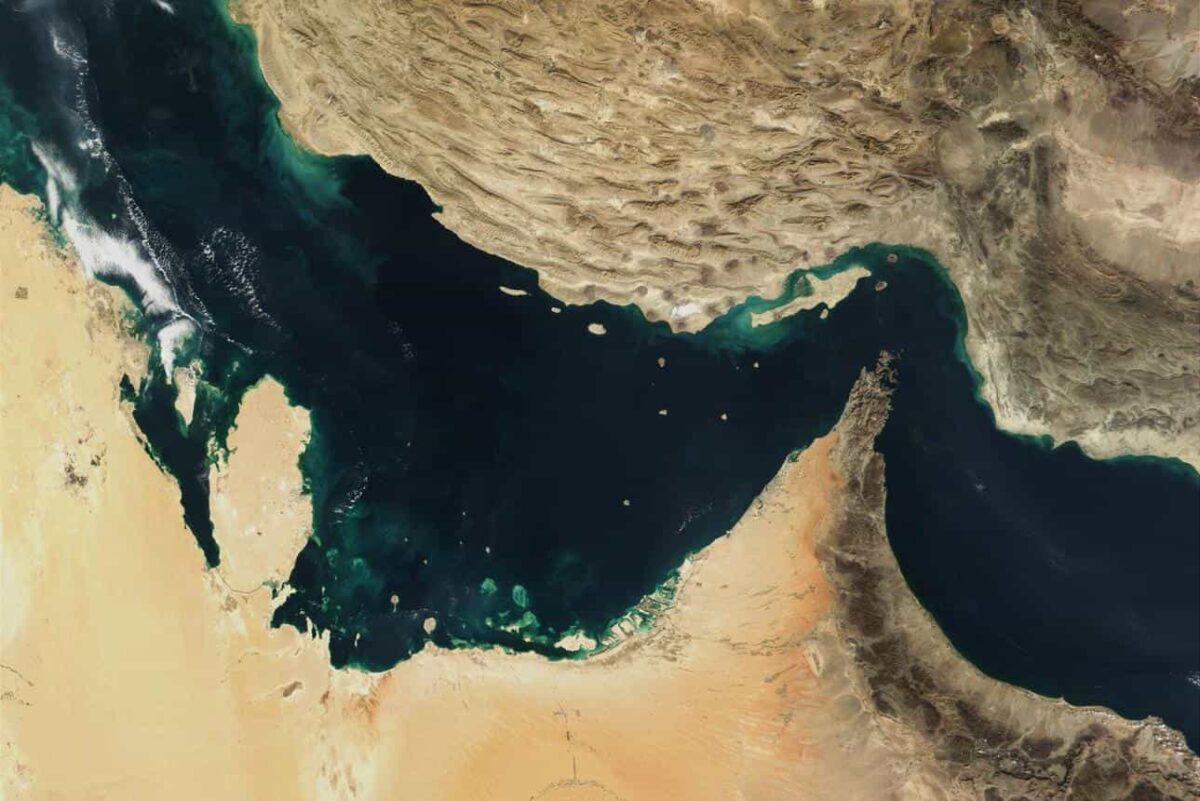
Source: Unsplash
Why Is Hormuz So Important to Global Energy Markets?
The International Energy Agency estimates that about 20 million barrels of crude oil and oil products per day passed through the Strait of Hormuz in 2025.
That represented approximately 25% of global seaborne oil trade.
Around 80% of the oil and oil products moving through the strait were destined for Asia, making the waterway particularly important to major economies such as China, India, Japan and South Korea.
The strait is also important for natural gas. More than 110 billion cubic metres of LNG passed through Hormuz in 2025. LNG exports from Qatar and the UAE accounted for almost 20% of global LNG trade, according to the IEA.
This explains why developments around Hormuz attract attention far beyond the Middle East.
Why Can a Shipping Disruption Affect Oil Prices?
Oil is traded in a global market.
When a major transportation route becomes uncertain or difficult to use, traders, governments and businesses begin assessing whether future supplies could become tighter.
That uncertainty can influence prices even before a physical shortage reaches consumers.
The IEA estimates that only around 3.5 million to 5.5 million barrels per day of crude oil could potentially be redirected through existing alternative pipeline routes. That is significantly below the normal volume moving through Hormuz.
This limited alternative capacity is one reason the Strait of Hormuz is considered a major global energy chokepoint.
How Could Higher Oil Prices Affect Ordinary People?
The effects of an energy disruption do not necessarily stop at petrol pumps.
Oil and energy costs are connected to many parts of the economy, including:
- Transportation
- Manufacturing
- Logistics
- Aviation
- Agriculture
- Packaging
- Chemicals
- Some forms of electricity generation
When energy and transportation costs rise, businesses may face higher operating expenses.
Some companies may absorb those costs, while others may pass part of the increase on to customers.
That can eventually affect the price of goods and services.
For households, the impact could therefore appear through fuel, transportation, food distribution and other everyday expenses.
Why Asia Is Particularly Exposed
Asia is the main destination for much of the energy transported through Hormuz.
The IEA reports that China and India together received 44% of the crude oil exports passing through the Strait of Hormuz in 2025.
This makes developments around the waterway particularly important for Asian economies.
India is especially relevant because the country depends heavily on imported energy. Changes in international crude oil prices can affect transportation costs, inflation, businesses and the broader economy.
The impact is not necessarily immediate or identical in every country, but prolonged disruption can increase pressure across energy markets.
Why Are Financial Markets Watching?
Financial markets react not only to what is happening today but also to what investors expect could happen next.
A prolonged disruption could increase concerns about:
Energy prices → Inflation → Interest rates → Business costs → Economic growth
The reverse can also occur.
If investors become more confident that commercial shipping will return to normal, some of the risk premium associated with the disruption could ease.
Reuters reported on August 10 that global markets were closely watching developments around Hormuz, while oil prices were rising amid uncertainty about the timing and conditions of a reopening.
What Is Happening Around Hormuz Now?
The situation remains fluid.
Iran says it is in the final stages of an agreement with Oman concerning new shipping lanes through the Strait of Hormuz. However, Iran has also said that an agreement with Oman by itself would not necessarily reopen the waterway.
Reuters reported that Tehran is seeking several concessions from the United States, including changes relating to sanctions, military threats and compensation for damage. The negotiations are being conducted indirectly, with Oman playing an important intermediary role.
This distinction is important.
An agreement on shipping arrangements is not necessarily the same as a full return to normal commercial traffic.
For businesses and markets, the key question is whether vessels can move safely, reliably and at normal scale.
Can Ships Simply Use Another Route?
Only to a limited extent.
The geography of the Persian Gulf means that relatively few alternatives can replace the full volume normally transported through Hormuz.
Saudi Arabia and the United Arab Emirates have pipelines that can bypass the strait, but the IEA estimates their available alternative capacity at approximately 3.5 million to 5.5 million barrels per day.
Other major oil-producing countries in the Gulf depend heavily on the strait for exports.
Natural gas presents another challenge. The IEA says there are no alternative routes capable of bringing the LNG volumes from Qatar and the UAE to global markets at the same scale.
What Could Happen If Shipping Normalises?
If commercial shipping through Hormuz becomes more predictable and reliable, several pressures could ease.
Potential effects include:
- Lower uncertainty in oil markets
- More predictable shipping costs
- Reduced pressure on energy prices
- Greater confidence for businesses
- Less concern about energy-driven inflation
- Improved planning for importers and exporters
However, the size and speed of any improvement would depend on how quickly normal shipping and energy flows actually return.
An announcement alone does not guarantee an immediate return to normal conditions.
What If Disruption Continues?
A prolonged disruption could create additional pressure on energy markets.
Higher energy costs can raise transportation and production expenses. Businesses may then face difficult choices: absorb higher costs, reduce margins, delay investment or increase prices.
Consumers could eventually experience higher costs for fuel, transportation and some goods and services.
The IEA has highlighted the scale of the potential energy-market impact because of the enormous volumes of oil and gas that normally pass through the waterway.
Why This Matters to India
For Indian readers, Hormuz is not simply a distant geopolitical story.
India is one of the major destinations for oil moving through the strait. The IEA reports that India and China together received 44% of crude oil exports passing through Hormuz in 2025.
A prolonged disruption could therefore have implications for India’s energy costs, transportation sector, businesses and inflation outlook.
The actual impact would depend on the duration of the disruption, global oil prices, alternative supplies, government measures and how quickly shipping conditions improve.
This is why developments around Hormuz are worth watching even for people who have no direct connection to the Middle East.
What Should Businesses Watch?
Businesses do not need to follow every geopolitical statement, but several indicators are worth watching:
Oil prices — Sustained increases can raise operating costs.
Shipping costs — Higher freight and insurance costs can affect importers and exporters.
Supply chains — Businesses dependent on imported energy or raw materials may face delays or higher costs.
Inflation — Energy prices can feed into transportation and production costs.
Interest rates — Persistent inflation can influence monetary policy and borrowing costs.
For companies with significant energy or transportation expenses, these factors can become important parts of financial planning.
What Should Households Watch?
For households, the most relevant indicators are simpler:
- Fuel prices
- Transportation costs
- Food and household expenses
- Inflation
- Interest rates
- Loan repayments
- Household savings
A geopolitical event does not automatically mean that household costs will rise sharply.
The impact depends on how long the disruption lasts and how global markets respond.
The sensible approach is therefore to monitor developments without assuming the worst.
The Bigger Picture
The Strait of Hormuz demonstrates how interconnected the global economy has become.
A development in a narrow waterway between Iran and Oman can influence:
Energy → Shipping → Businesses → Inflation → Consumers → Financial Markets
That chain explains why governments, energy companies, investors and businesses around the world are paying close attention to the situation.
The issue is not simply whether the strait is technically open or closed.
The more important question is whether commercial shipping can operate safely, reliably and at normal scale.
Final Takeaway
The Strait of Hormuz is much more than a regional shipping route.
Around 20 million barrels of oil and oil products per day passed through the waterway in 2025, representing about 25% of global seaborne oil trade. Around 80% of those oil flows were destined for Asia.
That makes the strait an important part of the global energy system.
As of August 10, 2026, diplomatic efforts involving Iran and Oman are progressing, but significant uncertainty remains over the conditions required for a full reopening.
For the global economy, businesses and households, the key thing to watch is not just the diplomatic announcements but whether normal energy and shipping flows actually return.
Sources
- International Energy Agency — Strait of Hormuz factsheet.
- International Energy Agency — The Middle East and Global Energy Markets.
- Reuters — Developments involving Iran, Oman and the Strait of Hormuz, August 9–10, 2026.
India’s Economy in 2026: What It Means for Businesses & Households